
Dreaming of a seaside wedding in Europe but not sure which country to start with? The best destination wedding locations in Europe differ in more than just the views. What matters even more is whether foreigners can legally marry there, when the crowds peak and how much restaurants and hotels for your guests will cost. We picked 10 destinations: Italy, Greece, France, Spain, Portugal, Croatia, Montenegro, Cyprus, Denmark and Scotland.
We are Mariia Sosnina and Vasilii Khmelev, and we photograph and film weddings in Montenegro, so that part comes from our own experience. For the other countries, we went to the official websites of their governments, town halls and marriage registries. We’re not ranking anyone: every country has its pros and cons, and we are just as honest about Montenegro as about the rest.
The short version
- In eight of the ten countries, a foreign couple can legally marry on the spot. France and Spain require a local address for a civil wedding, so couples there usually opt for a symbolic ceremony.
- Almost everywhere you need certificates with an apostille and a translation into the local language, and in many countries they are only valid for 3 or 6 months.
- Cyprus is the fastest: with the special procedure, you can marry just a few days after applying.
- Croatia takes the longest to prepare: you contact the registry office at least 3 months before the wedding.
- According to Eurostat data for 2024, restaurants and hotels are cheapest in Montenegro and Portugal and most expensive in Denmark and France.
What is the difference between a legal and a symbolic wedding?
A legal wedding differs from a symbolic one in that you walk away with a marriage certificate, while a symbolic ceremony is a celebration with no legal force. A legal ceremony is performed by a local registrar: at the town hall, at the registry office or at your venue, if the country’s law allows it. Whether your home country recognises the marriage depends on its own laws, so check this in advance.
A symbolic ceremony looks exactly the same: an arch, vows, rings and guests. The only difference is that the marriage is registered separately, usually at home before or after the trip. In fact, many couples choose this route on purpose. Signing the papers at home is easier, and abroad you simply enjoy the celebration, with no certificates, apostilles or translations.
Where in Europe can foreigners legally get married?
Foreigners who do not live in the country can legally marry in Italy, Greece, Portugal, Croatia, Montenegro, Cyprus, Denmark and Scotland. In France and Spain, you need a local address for a civil wedding.
| Country | Legal wedding for foreigners | Key timing |
|---|---|---|
| Italy | Yes, at the comune (town hall) | Declaration instead of banns at least 3 days before the wedding |
| Greece | Yes, at the town hall | Documents with an apostille and a Greek translation |
| France | No, only symbolic for a foreign couple | You must have lived in the commune for at least a month |
| Spain | Usually no, mostly symbolic | One of you needs an address in Spain |
| Portugal | Yes, at the civil registry | Marry within 6 months of approval |
| Croatia | Yes, with the registrar (matičar) | Get in touch 3 months ahead, documents 30 days ahead |
| Montenegro | Yes, with the registrar (matičar) | From one week to 15 days, set by the municipality |
| Cyprus | Yes, at the town hall | After 15 days, faster with the special procedure |
| Denmark | Yes, after a document check | Approval usually within 5 working days |
| Scotland | Yes, with the registrar | Notice at least 29 days before the wedding |
How much do restaurants and hotels for guests cost?
Restaurants and hotels for your guests are cheapest in Montenegro and most expensive in Denmark, according to Eurostat’s 2024 price index, where the EU average equals 100. The figures in the table are index points, not euros, but they clearly show where the reception and guest accommodation will cost less.
| Country | Restaurant and hotel price index, 2024 (EU = 100) |
|---|---|
| Denmark | 147.6 |
| France | 110.0 |
| Italy | 106.9 |
| Croatia | 95.4 |
| Cyprus | 89.0 |
| Greece | 86.4 |
| Spain | 83.9 |
| Portugal | 75.5 |
| Montenegro | 65.5 |
| Scotland | no data |
Source: Eurostat. Eurostat does not publish this data for the UK, and therefore not for Scotland either. Data as of October 2026.
1. Italy: Tuscany, Lake Como and the Amalfi Coast
Italy suits couples who dream of a classic wedding: a villa among the Tuscan vineyards, a garden above Lake Como or a terrace over the sea on the Amalfi Coast.
The choice of venues is huge, from country estates to old palazzos in the cities. Italy also has the most detailed statistics on foreign weddings: according to the Osservatorio Destination Wedding in Italy, in 2025 foreign couples spent around €67,000 on average on a wedding in Italy for 65 guests. That is a rough average, and your total will depend on the venue, the season and the number of guests.
- Legal wedding: yes. The town hall (comune) performs the ceremony, and you will need a nulla osta, a certificate from your home country stating there is no impediment to the marriage. You will find the details on the Italian government portal.
- Season and crowds: weddings by the sea and the lakes take place in the warm season, and July and August bring the most tourists.
- Downside: a legal ceremony at a beautiful villa is only possible where the comune has officially approved it for weddings. At many estates you will have a symbolic ceremony and go to the town hall for the legal part.
- Right for you if your budget allows it and you love the classics. We explain how Italy compares with its Adriatic neighbours in Montenegro, Croatia or Italy.
A lot like Como. The Bay of Kotor in Montenegro looks very much like Lake Como, with mountains dropping just as steeply into the water. You can also rent a boat for your photoshoot there and capture shots right from the water. |
2. Greece: Santorini and the Cyclades
Greece suits couples who picture a sunset wedding among whitewashed houses: Santorini with its caldera and the neighbouring Cycladic islands.
On Santorini, there is one main backdrop: the view from the cliffs over the caldera and the sea. Weddings in Greece also take place on other islands and on the mainland, so you have plenty to choose from. The legal ceremony is held at the town hall, and the celebration can be on a terrace with a view.
- Legal wedding: yes. Foreigners who do not live in Greece marry at the town hall. As the Municipality of Heraklion lists, the documents include a marriage licence from your home country and a birth certificate, both with an apostille and a Greek translation.
- Season and crowds: July and August are the busiest months on the islands, so many couples choose May, June or September.
- Downside: every document has to be translated into Greek, and each town hall has its own list of papers, so check it on the island where you will marry.
- Right for you if you dream of sunset photos by the sea and a small wedding on a terrace. By the way, you can also find open-sea views in Montenegro, in Budva: we cover venues and the season in our guide to a wedding in Budva.
3. France: Provence and the Côte d’Azur
France suits couples who are happy with a beautiful symbolic ceremony: a château in Provence, lavender fields and villas on the Côte d’Azur.
A foreign couple who does not live in France cannot legally marry there. According to the official French government portal, you can marry in the commune where one of you, or one of your parents, has lived for at least a month by the time the banns are published. A foreign couple without an address in France can only marry at their own country’s consulate or in the French overseas territories. One more rule: in France, a religious ceremony may not take place before the civil one.
- Legal wedding: not for a foreign couple, only a symbolic ceremony.
- Season and crowds: weddings in the south of France take place in the warm season, and the Côte d’Azur is very busy in summer.
- Downside: you will have to make it legal at home, before or after the trip.
- Right for you if you’re signing the papers at home and want the celebration in France at a château or a winery.
4. Spain: Mallorca and Andalusia
Spain suits couples who want a celebration on the coast or at a country estate in Mallorca or Andalusia and are happy to make it legal at home.
In Spain, a civil wedding is handled by the civil registry or a notary where one of the couple lives, as set out in the Civil Registry Act. If you both live abroad, you won’t be able to marry legally at a Spanish town hall. Under Spanish law, a Catholic wedding has civil effect, but whether a couple from abroad can marry this way is something to check with the parish.
- Legal wedding: usually not, most couples have a symbolic ceremony.
- Season and crowds: coastal weddings take place in the warm season, and Mallorca gets crowded in summer.
- Downside: without an address in Spain there is no civil wedding, so you will need to marry legally at home.
- Right for you if the celebration by the sea or at an estate matters most and you will handle the paperwork in your home country.
5. Portugal: Sintra, the Algarve and the Douro
Portugal suits couples who love the ocean: the palaces and gardens of Sintra, the Algarve cliffs above the Atlantic and the wine estates of the Douro Valley.
Foreigners can submit their documents at any civil registry office. You will need a passport, a birth certificate and a certificate of capacity to marry issued no more than 6 months earlier, according to the Portuguese Registry Institute. Once approved, the couple has 6 months to marry. A ceremony at the registry office itself costs €120, and one held elsewhere costs more.
- Legal wedding: yes, foreigners can start at any civil registry office.
- Season and crowds: weddings take place in the warm season, and the Algarve is packed with holidaymakers in summer.
- Downside: Portugal is at the far western edge of Europe, so guests from the east of the continent have a longer flight.
- Right for you if you want palaces, a winery or cliffs above the ocean and a straightforward legal ceremony.
6. Croatia: Dubrovnik and Hvar
Croatia suits couples who want the Adriatic inside the European Union: the walls of old Dubrovnik, islands like Hvar and the Split waterfront.
In Croatia, the rules for foreigners are the same as for local couples. The Croatian Ministry of Foreign Affairs advises contacting the local registry office at least 3 months in advance and bringing your documents 30 days before the wedding. Your certificates should be recent, no older than 3 months, and each one needs an apostille and a translation by a court interpreter.
- Legal wedding: yes. The ceremony is performed by the matičar, the local marriage registrar, and a ceremony at your venue is possible as an exception and for an extra fee.
- Season and crowds: in summer, old Dubrovnik is overflowing, and the city even runs a Respect the City programme to cope with the flow of tourists.
- Downside: you have to start preparing earlier than anywhere else, and Dubrovnik and the islands are very crowded in summer.
- Right for you if almost all your guests live in the EU and the Schengen Area is convenient for them. You will find a detailed comparison in where to get married: Montenegro, Croatia or Italy.
7. Montenegro: the Bay of Kotor, Perast and Budva
Montenegro suits couples who want the Adriatic with mountains rising straight out of the sea: the Bay of Kotor, Perast, Budva and Sveti Stefan.
In the Bay of Kotor, weddings take place on hotel terraces and in old palazzos by the water. For the old town, read our guide to a wedding in Kotor, and for an intimate celebration, consider a wedding in Perast. All types of venues are covered in our overview of wedding venues in Montenegro.
- Legal wedding: yes. The ceremony is performed by the matičar of the municipality where the wedding takes place. You apply in advance, from one week to 15 days before the wedding, and the exact deadline is set by the municipality itself. Every step is in our guide to wedding documents in Montenegro.
- Season and crowds: venues host weddings roughly from May to October. On cruise ship days, old Kotor gets crowded, so couples usually look for a venue elsewhere in the bay.
- Downside: the country is not in the EU or the Schengen Area, and there are two international airports, in Tivat and Podgorica. A church wedding on its own does not count as a marriage, so you need the civil ceremony with the matičar.
- Right for you if you want the sea and the mountains in one place and a sensible budget: a wedding here usually costs between €20,000 and €100,000. If you prefer the open sea to the bay, take a look at our guide to a wedding in Budva. And we compared the neighbours in Montenegro, Croatia or Italy: where to get married abroad.
Getting married in Montenegro? We can help
Write to us as soon as you have settled on the month of your wedding. We live in Montenegro, photograph weddings here and will tell you where to start.
Next, a trusted local planner we recommend will step in. They will check the municipality’s requirements and available dates, then put together a quote for your number of guests.
At weddings in Montenegro, the two of us work together: Mariia Sosnina takes the photos and Vasilii Khmelev shoots the video. Yana and Andrew, for example, flew in from Austria and got married in the summer of 2025 at Talići Hill, a villa above Sutomore, with the ceremony in an olive grove.
“For portraits, I wait for the golden hour before sunset. But in Montenegro, the sun disappears behind the mountains earlier than the forecast says, so for every venue I work out in advance when to start.”Mariia Sosnina
You will find more photos in our wedding portfolio, and we have gathered beautiful spots along the whole coast on our page of photoshoot locations in Montenegro. Send us your wedding date, and we’ll let you know if we’re free that day.
8. Cyprus: Limassol, Paphos and Ayia Napa
Cyprus suits couples who want a quick, straightforward legal wedding by the sea.
Foreigners have been coming to Cyprus to marry for a long time. According to the Cyprus Statistical Service, 6,533 civil marriages took place on the island in 2024, and only 1,908 of them involved local residents. Couples marry at town halls, for example in Limassol, and celebrate on the beach, at a villa or in a restaurant.
- Legal wedding: yes, and you don’t need to live in Cyprus. Under the rules of the Municipality of Limassol, you can marry 15 days after applying (fee €128), or within a few days with the special procedure (€282). Documents must be in Greek or English.
- Season and crowds: the beach season is long, from spring to late autumn, and the beaches are busiest in summer.
- Downside: the island is far from the rest of Europe, so guests almost always fly longer than to the Adriatic.
- Right for you if what you need most is a legal marriage by the sea on a short timeline.
9. Denmark: Copenhagen and the islands
Denmark suits couples who want to marry legally and quickly and are happy to hold the big celebration somewhere else.
Don’t expect a warm-beach wedding like in the south, but you do get cosy Copenhagen and the islands. Couples from other countries apply to the Danish Agency of Family Law. If all your papers are in order, approval usually comes within 5 working days, it is valid for 4 months, and the fee is currently 2,100 Danish kroner.
- Legal wedding: yes. The main condition is that you both enter and stay in Denmark legally, for example on a tourist visa.
- Season and crowds: the wedding season is short and falls in summer.
- Downside: restaurants and hotels here are the most expensive in our list, with a Eurostat index of 147.6.
- Right for you if you want to marry just the two of you without much paperwork and invite your guests to a celebration later, somewhere warm.
10. Scotland: Edinburgh and the Highlands
Scotland suits couples who dream of castles, green hills and changeable skies rather than a hot beach.
You don’t need to live in the UK to marry here. According to the official Scottish government portal, couples who live outside the UK give notice to the registrar at least 29 days before the wedding, along with a certificate of no impediment from their home country and a certified English translation where needed. The ceremony can be civil, religious or a belief ceremony, led by a non-religious organisation.
- Legal wedding: yes, with no residence requirement.
- Season and crowds: weddings mostly take place in summer, and the weather changes even then.
- Downside: Scotland is part of the UK, so it is not in Schengen and has its own visa rules.
- Right for you if you dream of a castle and kilts rather than the sea and a tan.
How do you choose a country for your destination wedding?
Choosing a country for your destination wedding is easiest if you answer five questions honestly:
- Where will you make it legal? If you want a legal marriage on the spot, France and Spain are out. If you’re making it legal at home, any country works.
- How many guests are coming, and from where? For a big wedding, direct flights and hotels near the venue matter, while for an elopement any beautiful place will do.
- Do your guests need visas? Montenegro and Scotland are in neither the EU nor Schengen and have their own visa rules, so check them for every guest.
- When is the wedding? The most popular venues are booked first for the best dates of the season, so the more flexible your date, the more choice you have.
- What is your budget? Compare price levels in the table above, and if you are considering Montenegro, see our guide to the cost of a wedding in Montenegro.
Do you need a planner for a destination wedding?
You almost always need a planner for a destination wedding, because keeping everything under control from afar, in a foreign language and without local suppliers you know, is very hard. Here is what a planner takes care of:
- Documents. They find out the local registry office’s requirements and make sure your certificates are still valid on the wedding date.
- The venue and the date. They check available dates, and good venues have very few of them in high season.
- Menu, decor and suppliers. They arrange catering, florists and musicians on site.
- Timing and guests. They plan the day minute by minute and sort out transfers and accommodation for your guests.
We explain how to find the right person and what to ask them in our guide on how to choose a wedding planner in Montenegro.
Frequently asked questions
What is the most popular destination wedding location in Europe?
There is no single official ranking, but there are figures for two countries. According to the Osservatorio Destination Wedding in Italy, around 16,700 foreign couples married in Italy in 2025. Among couples who need a quick legal wedding, Cyprus is popular: in 2024, only 1,908 of the island’s 6,533 civil marriages involved its residents.
Which European country is the easiest for foreigners to get married in?
Cyprus is the easiest: you don’t need to live there, the standard procedure lets you marry 15 days after applying, and the special procedure takes just a few days. Denmark is also quick, with approval usually granted within 5 working days once all documents are in. In Montenegro, you apply from one week to 15 days ahead, depending on the municipality.
Can foreigners legally get married in France?
A foreign couple who does not live in France cannot marry at a French town hall. You can only marry in a commune where one of you or your parents has lived for at least a month. Without such an address, the options are your own country’s consulate or the French overseas territories, so most couples hold a symbolic ceremony in France.
Can foreigners legally get married in Spain?
A civil wedding in Spain is handled where one of the couple lives, so if you both live abroad, you cannot legally marry at a Spanish town hall. Under Spanish law, a Catholic wedding has civil effect, but whether a couple from abroad can marry this way is something to check with the parish. Most couples hold a symbolic ceremony in Spain.
What is a symbolic wedding, and is it legally binding?
A symbolic wedding looks like a real ceremony, with vows, an arch and guests, but it has no legal force. The marriage is registered separately, usually at home before or after the trip.
Where in Europe is a seaside wedding cheapest?
According to Eurostat’s 2024 index, restaurants and hotels are cheapest in Montenegro (65.5 against an EU average of 100), followed by Portugal (75.5), Spain (83.9) and Greece (86.4). These are index points, not euros. A wedding in Montenegro usually costs between €20,000 and €100,000, depending on the venue and the number of guests.
When is the best time for a seaside wedding in Europe?
Seaside weddings in southern Europe take place in the warm season, roughly from May to October. July and August are the hottest and busiest months on the coast, so many couples choose the start or the end of the season. In Denmark and Scotland, the wedding season is shorter and falls in summer.
How far in advance should you plan a destination wedding?
Book your venue for the season as early as possible, but don’t get your certificates too early: in many countries they are only valid for 3 or 6 months. Croatia takes the longest, as you contact the registry office at least 3 months ahead. In Scotland, you give notice at least 29 days before the wedding.
More about getting married in Montenegro
If Montenegro is your choice, these guides will help with everything else:
- Wedding venues in Montenegro
- Montenegro, Croatia or Italy: where to get married abroad
- Cost of a wedding in Montenegro
- Wedding documents in Montenegro
- How to choose a wedding planner
- Wedding in Kotor
- Wedding in Perast
- Wedding in Budva
- Elopement in Montenegro: a wedding for two
- 10 reasons to get married in Montenegro
From the lavender fields of Provence to the castles of Scotland, Europe has a place for every dream. And if you are drawn to where the mountains run straight down to the sea, come and join us in Montenegro. I’m Mariia Sosnina, a wedding photographer in Montenegro, and I photograph weddings together with Vasilii Khmelev.
Planning a wedding in Montenegro? Tell us when it will be and how many guests are coming. We’ll put you in touch with a trusted local planner, who will check which dates are free and prepare a quote. And we’ll take care of the photos and video on the day.

Montenegro, Croatia or Italy: Where Should You Get Married Abroad?

Budva Wedding: Venues, Ceremony and Local Tips
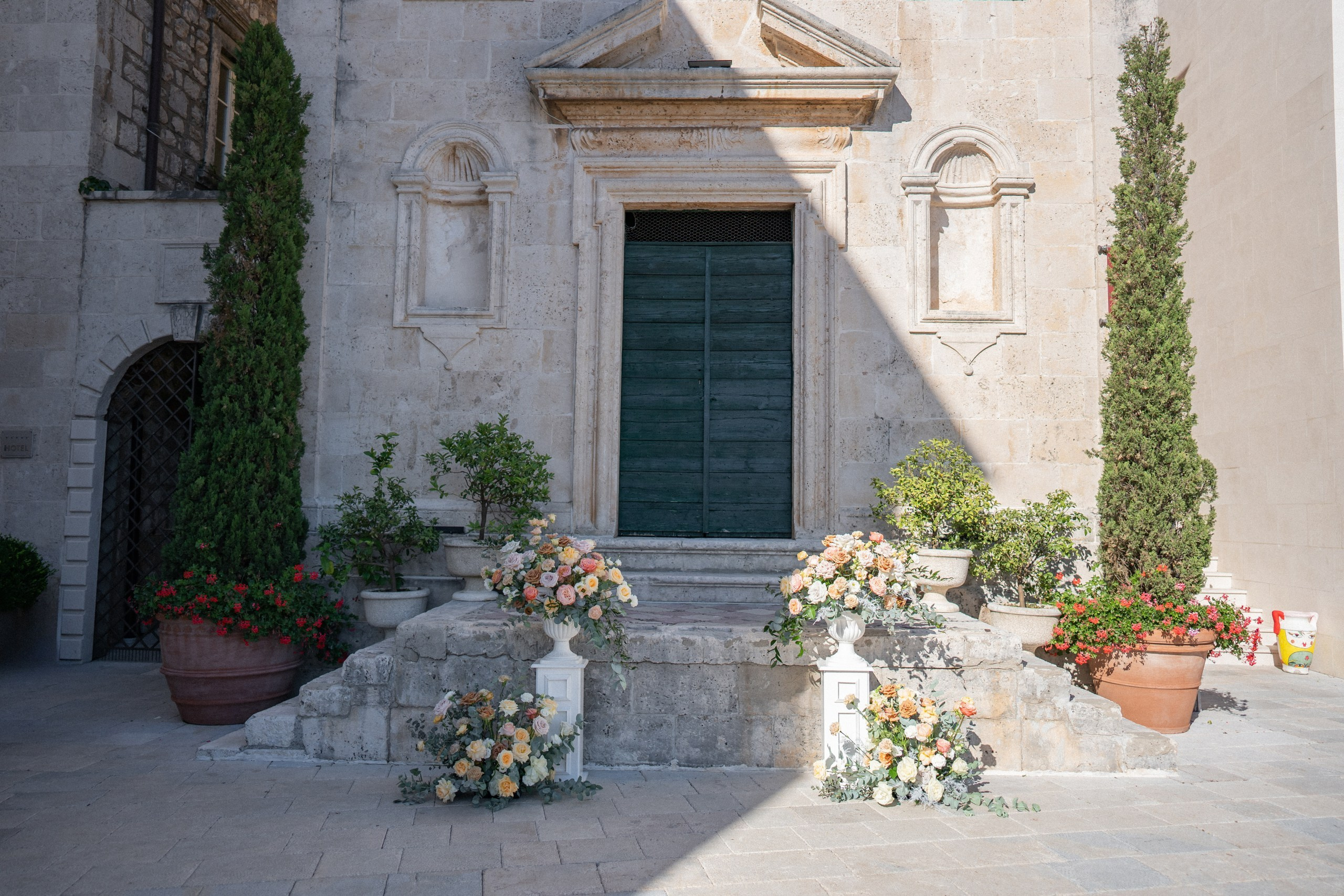
Perast Wedding: Venues, Ceremony and How the Day Works

A Wedding at Aman Sveti Stefan: the legendary island resort on the Budva Riviera
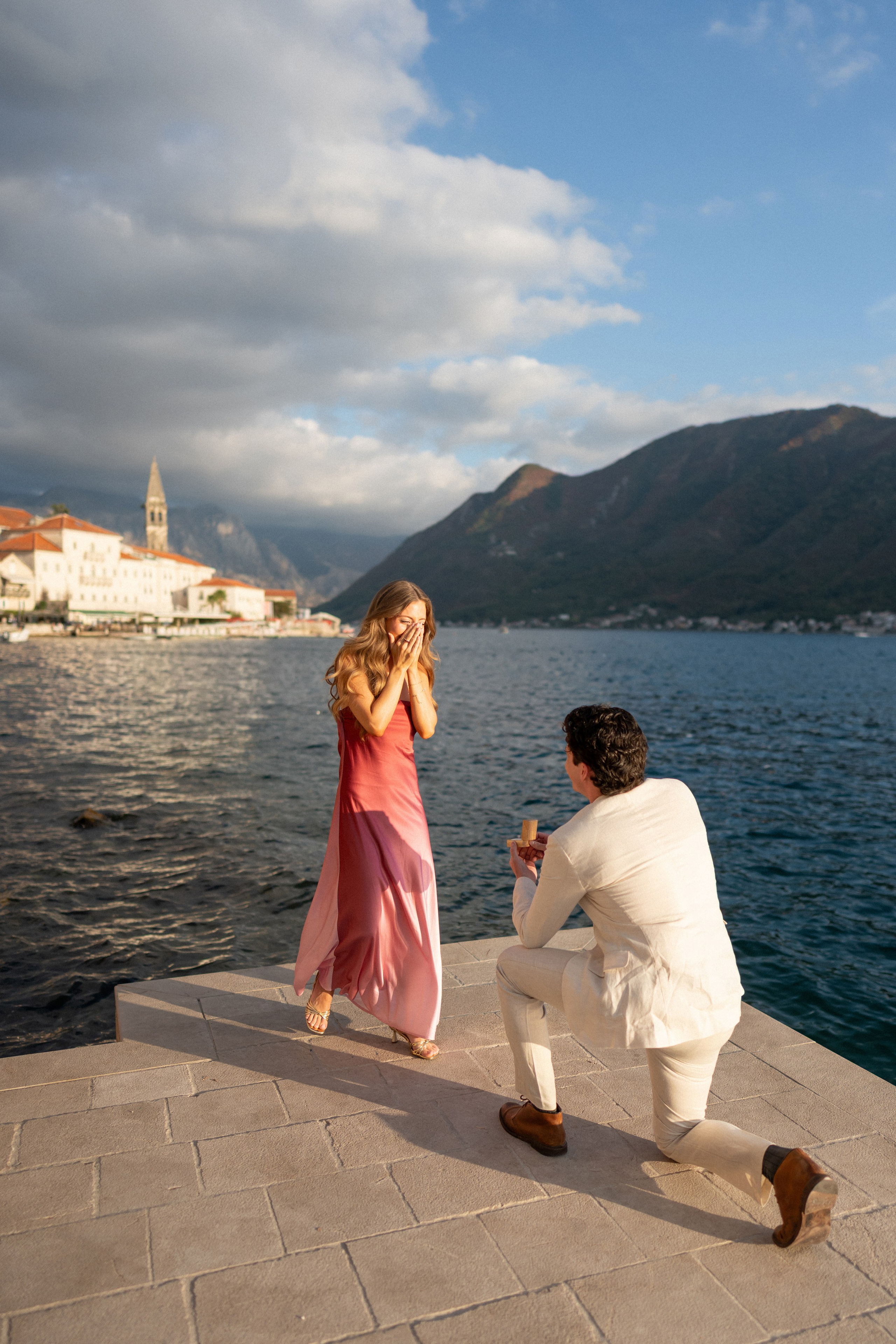
Best Time to Propose in Montenegro: Month and Time of Day

Mamula Island Wedding: A Fortress Island at the Mouth of the Bay of Kotor
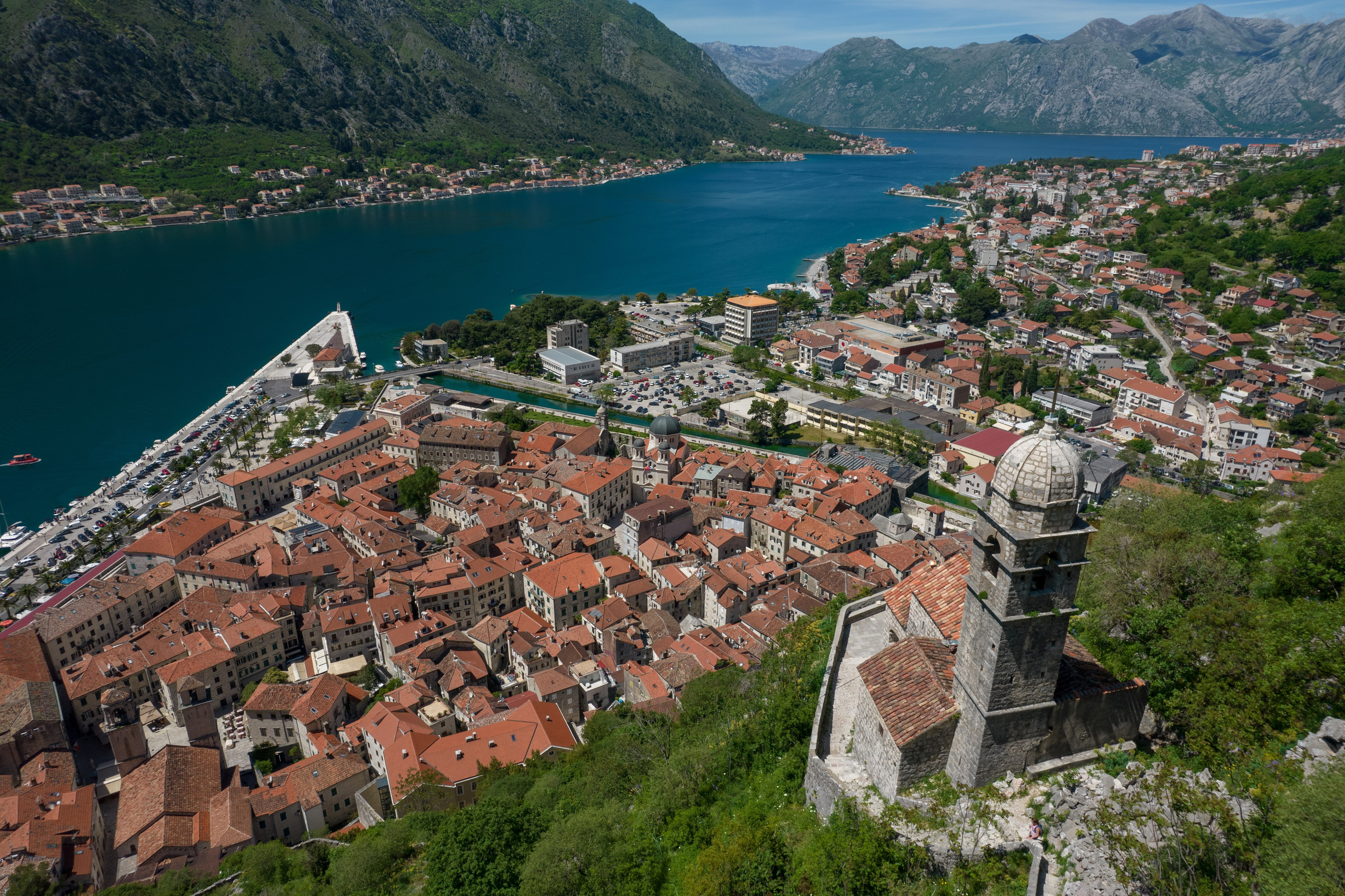
Best Hotels in Kotor: Where to Stay and What to Look For

Photographer in Porto Montenegro and Tivat

Photographer in Budva

Photographer in Perast

Photographer in Kotor

Wedding in Kotor: Venues, Ceremony and a Photographer’s Tips

A Wedding at Eagle Eye Villa Above Kotor

Adriatica: a Wedding on the Terrace and the Pier in Kotor Bay
