
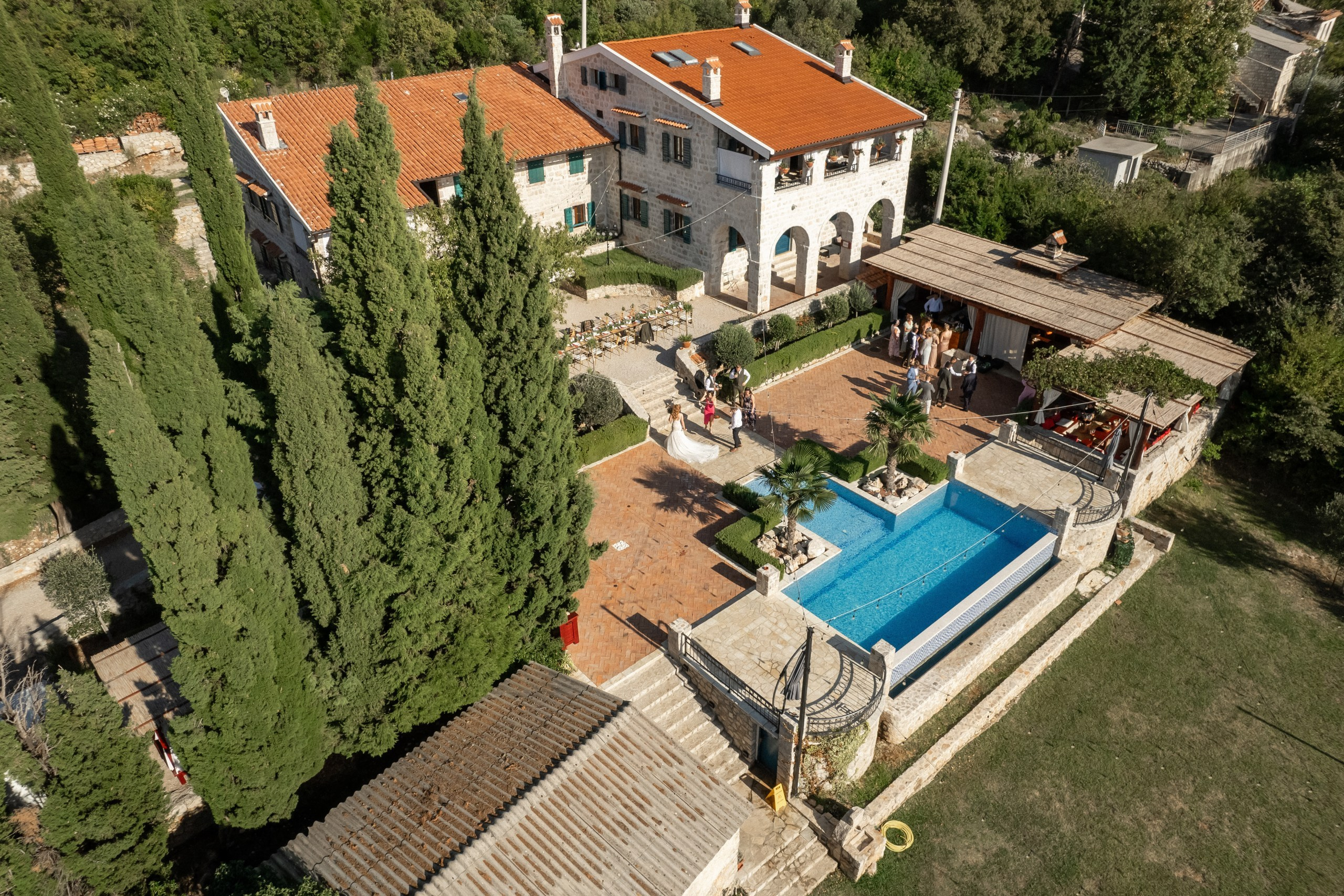
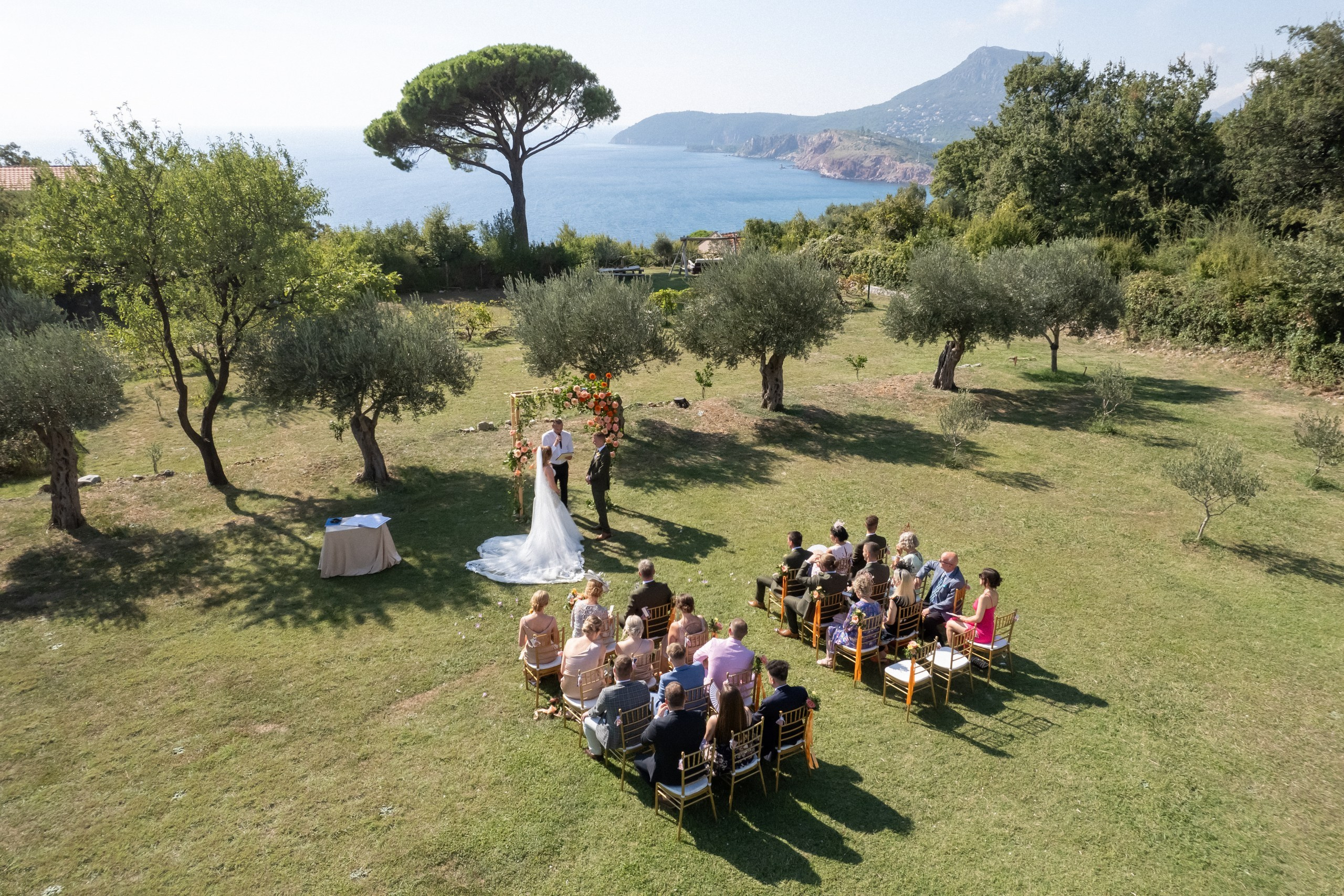
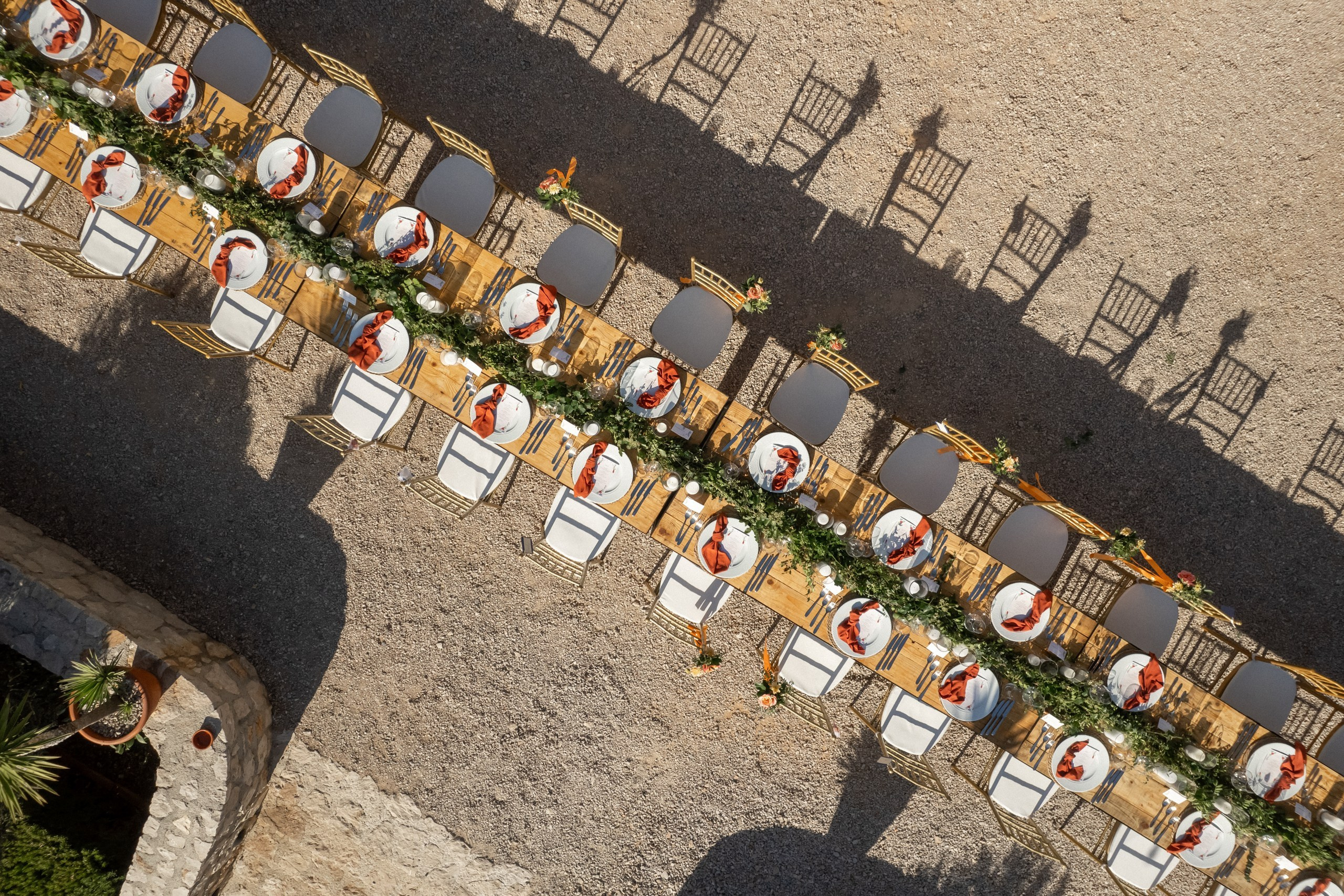
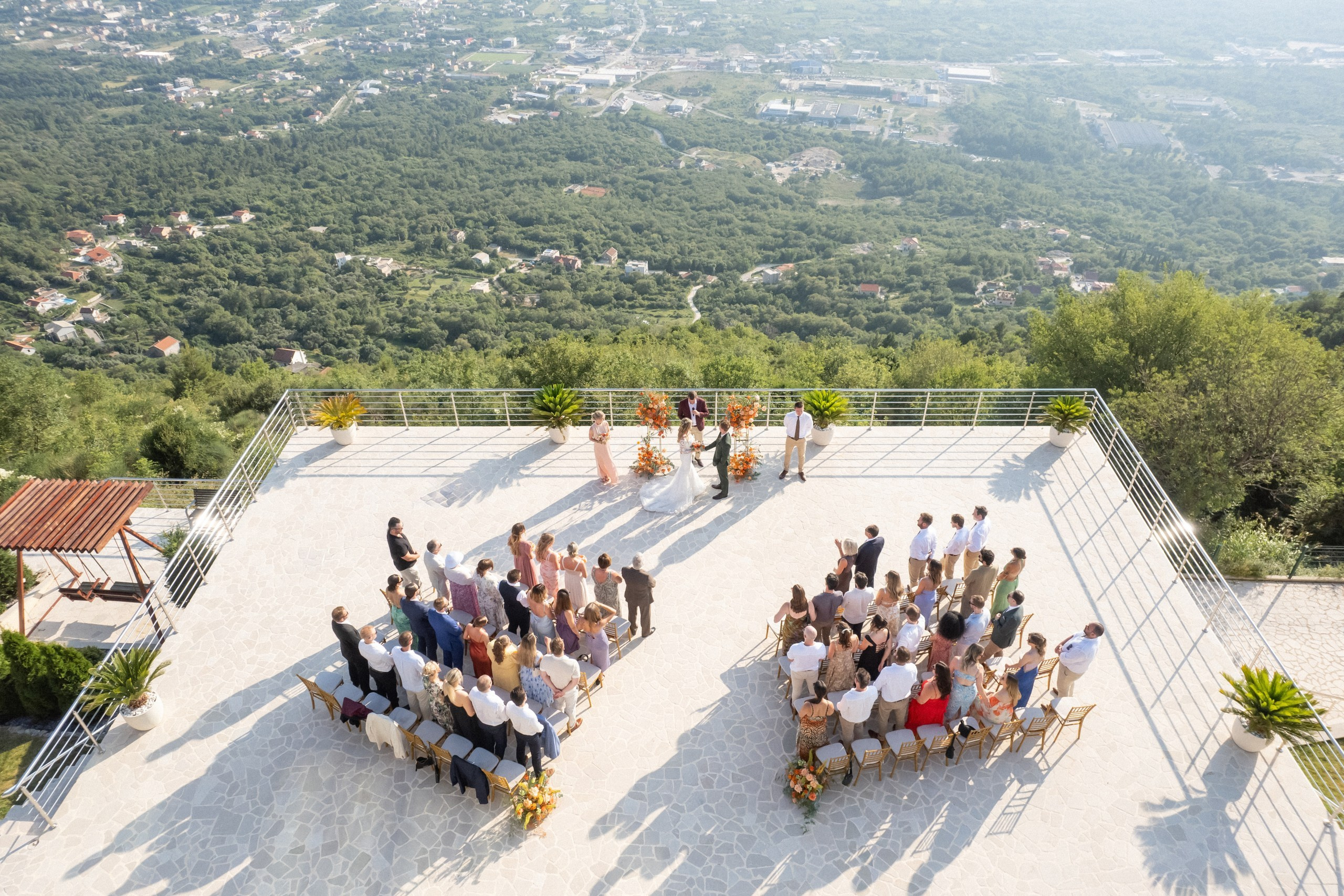
Torn between Montenegro, Croatia and Italy for your wedding abroad? Here’s the good news: in all three countries, foreign couples can marry legally, with a real civil ceremony and an official marriage certificate. Italy has the widest choice of villas and towns, but it’s also the most expensive. Croatia gives you the same Adriatic inside the European Union, though Dubrovnik and the islands get very crowded in summer. And Montenegro has the Bay of Kotor, where everything is close together and a wedding can fit into a budget of €20,000 to €100,000.
We’re Mariia Sosnina and Vasilii Khmelev, and we photograph and film weddings in Montenegro, so yes, we love it and we won’t pretend otherwise. But for this comparison we relied on the law and on the official websites of ministries, town halls and Eurostat, not on gut feeling. The budgets come from an Italian industry study, a Croatian wedding planner’s estimate and our own experience in Montenegro. If Italy or Croatia suits you better, we’ll tell you. And if you’re already leaning towards Montenegro, have a look at our overview of wedding venues in Montenegro.
The short version
- Foreign couples can marry legally in all three countries. In Italy and Croatia, a church wedding in a faith recognised by the state can replace the civil ceremony if you sort out the paperwork with the town hall or registry office in advance. In Montenegro, there’s no way around the civil ceremony with the registrar.
- Croatia needs the earliest start: you contact the local registry office at least 3 months before the date.
- Marrying at a villa or by the sea is easier in Montenegro and Croatia. In Italy, you can only do it where the town hall has officially approved the venue.
- Montenegro is outside the EU and the Schengen area, while Croatia and Italy are both in Schengen.
- According to Eurostat’s 2024 data, restaurants and hotels in Montenegro are noticeably cheaper than in Croatia and Italy.
Montenegro, Croatia or Italy: a side-by-side comparison
In short, you can marry legally in any of them. What differs is the timeline, where the ceremony can take place and how your guests get there. Let’s start with the paperwork:
| Montenegro | Croatia | Italy | |
|---|---|---|---|
| Who registers the marriage | The registrar (matičar) of the municipality where you marry | The registrar, on the same terms as for Croatian citizens | The comune, i.e. the town hall |
| When to start | Apply by the municipality’s deadline: one week to 15 days before | Get in touch at least 3 months ahead, documents 30 days before | The comune sets the deadline |
| How recent documents must be | Certificate of marital status no older than 3 months | Birth certificate and certificate of no impediment, both no older than 3 months | Nulla osta usually submitted within 6 months |
| Interpreter | Sworn court interpreter, for documents and at the ceremony | Sworn court interpreter, to translate documents | At the ceremony, if you don’t speak Italian |
Where you can say your vows and which kind of union is open to you differs from country to country:
| Montenegro | Croatia | Italy | |
|---|---|---|---|
| Church wedding | Not a marriage on its own: you also need a civil ceremony with the registrar | Can replace the civil ceremony if your religious community has an agreement with the state: you get a certificate from the registrar beforehand, and afterwards the marriage is entered in the register | A Catholic wedding or a ceremony of some other faiths can replace the civil one: you file the paperwork with the comune beforehand, and afterwards the marriage is entered in its register |
| Ceremony outside the registry office | As an exception, with the registrar’s permission | As an exception, with the registrar’s permission and for an extra fee | Only at places the comune has designated |
| Same-sex couples | Life partnership | Life partnership, open to foreigners too | Civil union (unione civile) |
Guests and budget
And finally, the things your guests and your wallet care about most:
| Montenegro | Croatia | Italy | |
|---|---|---|---|
| EU, Schengen, currency | Outside the EU and Schengen, uses the euro | EU member, in Schengen and the eurozone since 2023 | EU and Schengen, euro |
| Restaurant and hotel price level, Eurostat index for 2024 (EU = 100) | 65.5 (about a third below the EU average) | 95.4 (5% below) | 106.9 (7% above) |
| Wedding budget | Usually €20,000 to €100,000 | Usually from €50,000, according to a wedding planner in Dalmatia (2025) | Around €67,000 on average for 65 guests (2025) |
Sources: Family Law of Montenegro, the Croatian Family Act and Ministry of Foreign Affairs, the Italian government portal and Italian comune websites, Eurostat, the Osservatorio Destination Wedding in Italy study (Convention Bureau Italia, 2025 data), a Dalmatian wedding planner’s estimate for the Dalmacija Danas news site. The Montenegro budget is based on our own experience. Data as of October 2026.
Where is it easiest for foreigners to marry legally?
When it comes to the ceremony location, Montenegro and Croatia make it easiest: the procedure is similar, and the registrar can allow the ceremony at your venue. Italy adds one more document, the nulla osta from your home country, and you have fewer options for where the legal ceremony can take place.
Montenegro
In Montenegro, the marriage is registered by the registrar (matičar) of the municipality where the wedding takes place. You apply in advance, and each municipality sets its own deadline: in some, a week is enough, in others you need at least 15 days. Your certificate of marital status must be no older than 3 months, apostilled and translated by a sworn court interpreter. The same interpreter then comes to the ceremony too. You can have a church wedding here as well, but only the civil ceremony with the registrar makes you legally married, so the church wedding comes on top of it. We’ve laid out every step in our guide to Montenegro marriage requirements and documents.
Croatia
In Croatia, foreigners marry on the same terms as Croatian citizens. The Croatian Ministry of Foreign Affairs recommends contacting the matični ured, the local registry office, at least 3 months before your date. Documents are submitted 30 days before the wedding.
Your birth certificate and a certificate confirming you’re free to marry must be no older than 3 months. Both need an apostille and a translation into Croatian by a sworn court interpreter. Under the Croatian Family Act, the date is usually set between the 30th and 45th day after you apply, and earlier only as an exception. A church wedding can replace the civil ceremony, but only if your religious community has an agreement with the state. You get a certificate from the registrar beforehand confirming that all the conditions for marriage are met, and after the ceremony the marriage is entered in the state register.
Italy
In Italy, the marriage is registered by the comune, the town hall of the place where you marry. As the Italian government portal explains, the key document for foreigners is the nulla osta. It’s a certificate from your home country stating that there’s no impediment to the marriage. It gets legalised or apostilled, translated into Italian and handed in to the comune, usually within 6 months of the date it was issued.
If you’re both foreigners and don’t live in Italy, there are no banns. Instead, you sign a declaration that there’s no impediment to the marriage at least 3 days before the wedding. Not fluent in Italian? Then you’ll need an interpreter at the ceremony, and it’s up to you to find one, because the comune doesn’t provide it. A Catholic wedding or a ceremony of some other recognised faiths can also replace the civil one, but only if you filed the paperwork with the comune in advance and the marriage is entered in its register afterwards.
So if you’d like as little paperwork as possible, Montenegro and Croatia are usually simpler. Italy is perfectly doable too, it’s just that a lot depends on the individual comune.
Getting married in Montenegro? We can help
Paperwork, translations and emails with the registry office are best left to a wedding planner. We live here and photograph weddings, so we’ll happily answer your questions about venues, timing and documents. We’ll also recommend a trusted local planner, who will check what your municipality requires, find out which dates are still free at the venues and give you an idea of what the celebration will cost.
When is the best time to marry in each country?
In all three countries, coastal weddings happen in the warm season. In Montenegro, venues host weddings roughly from May to October. July and August on the coast are hot and busy, so consider the start or the end of the season. It’s much the same on the Croatian and Italian coasts: the more popular the place, the earlier you should book your date.
Dreaming of a ceremony among old stone walls? Take a look at our guide to a wedding in Kotor, where we explain where the ceremony takes place and how to plan the day. And keep the mountains around the bay in mind, because they change the timing of the whole evening.
“In the Bay of Kotor, I don’t go by the sunset time in the forecast. I look at the mountains: the sun disappears behind the ridge earlier, so we work out the golden hour for portraits in advance for every spot.”Mariia Sosnina
Which venues can you choose from?
Italy wins on variety: Tuscan villas, the shores of Lake Como, the Amalfi Coast. In Croatia, couples choose Dubrovnik’s old town, islands like Hvar, and Istria. In Montenegro, weddings take place in old palazzos by the water, on terraces above the Bay of Kotor, at villas like Talići Hill and in old towns. We’ve covered how a wedding in Perast works in a separate guide.
Where the legal ceremony itself can happen is down to the law. In Montenegro and Croatia, the registrar can allow a ceremony outside the registry office as an exception, so you can marry on a hotel terrace, in a garden or at a villa. If you’d love a celebration where your guests stay under one roof with you, have a look at our guide to a wedding villa in Montenegro.
In Italy, you can only marry legally at a villa or a castle if the comune has designated it as an official place for civil weddings. Everywhere else, couples have a symbolic ceremony, and the legal part happens at the town hall. Had your heart set on an Italian villa wedding? Read why a villa wedding in Montenegro can be an alternative to Italy.
Guests: flights, transfers and accommodation
Italy is the easiest to fly to: there are international airports all over the country, from Milan and Rome to Naples. For Croatia, guests fly into Dubrovnik, Split or Zagreb.
Montenegro has two international airports, in Tivat and Podgorica. Guests who don’t need a Schengen visa or already have one usually fly in via Dubrovnik: the airport isn’t far from the Bay of Kotor, though you do cross a border on the way.
On the plus side, the Bay of Kotor itself is compact. Kotor, Perast and Tivat all sit on the same bay, so it’s easy to put your guests up near the venue, and the drives on the wedding day are short.
Where will you find fewer tourists in wedding season?
Let’s be honest: in summer, every beautiful place is busy. Dubrovnik’s old town has been on the UNESCO list since 1979, and it gets so crowded that the city launched its own Respect the City programme to cope with the flow of tourists.
Kotor and its bay have also been on the UNESCO list since 1979, and on days when cruise ships call at the port, the old town fills up. But venues are spread all around the bay, and in our experience it’s easy to find a quiet spot for a wedding away from the old town. You could, for example, celebrate in the fortress on Mamula Island right at the mouth of the bay, or at the Regent Porto Montenegro hotel in Tivat.
We’ve gathered beautiful spots for a walk and a photo shoot all along the coast on our page of photo locations in Montenegro.
Wedding costs: what you can honestly compare
Nobody can give you an exact price for a wedding, but there are benchmarks. According to the Osservatorio Destination Wedding in Italy study by Convention Bureau Italia, foreign couples spent around €67,000 on average on a wedding in Italy in 2025, with 65 guests. We didn’t find comparable statistics for Croatia. A wedding planner from Dalmatia did tell the Dalmacija Danas news site, though, that weddings for foreign couples there usually start at €50,000, and luxury ones go up to €250,000. That’s a rough guide, not statistics, and in both countries the final figure depends on the number of guests, the venue and the season.
There’s also an official price index. Every year, Eurostat compares price levels in restaurants and hotels, with the EU average set at 100. In 2024, Italy came out at 106.9, Croatia at 95.4 and Montenegro at 65.5. These are index points, not euros: restaurants and hotels in Montenegro are about a third cheaper than the EU average, and your reception and your guests’ accommodation depend directly on them.
For Montenegro, we have our own benchmark: a wedding here usually costs between €20,000 and €100,000, depending on the venue, the number of guests and the programme. We break down what goes into the budget in our guide to the average cost of a wedding in Montenegro.
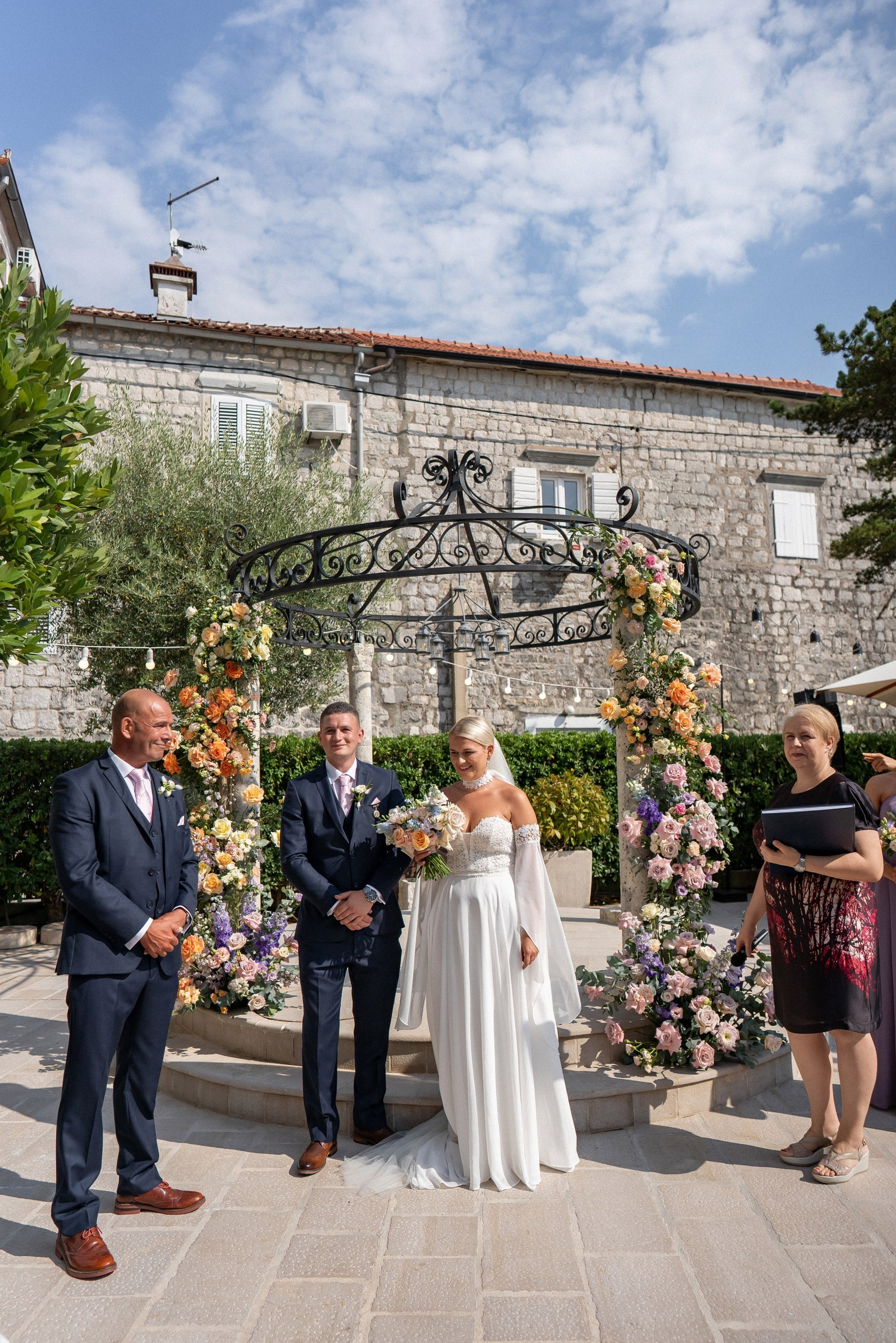
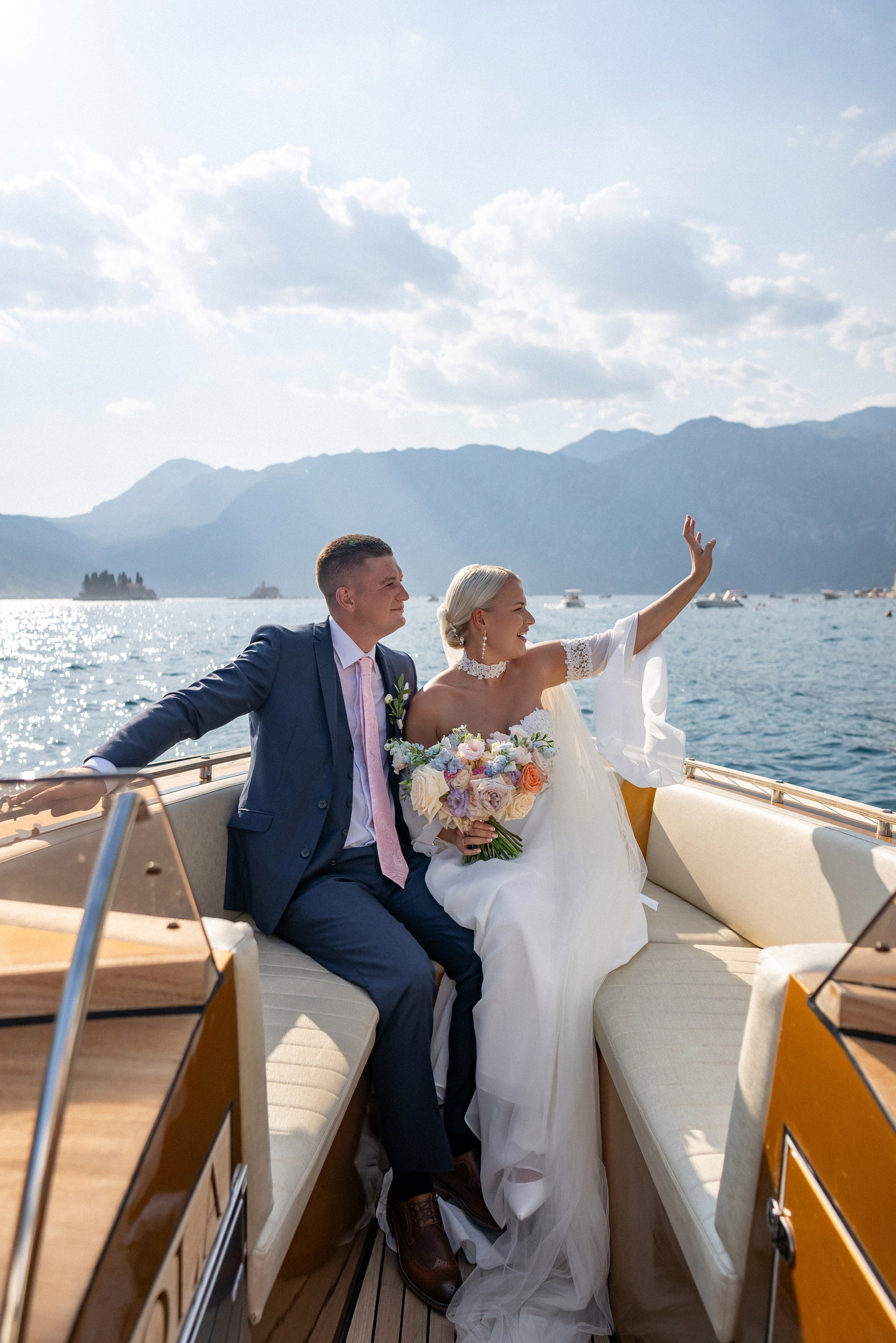
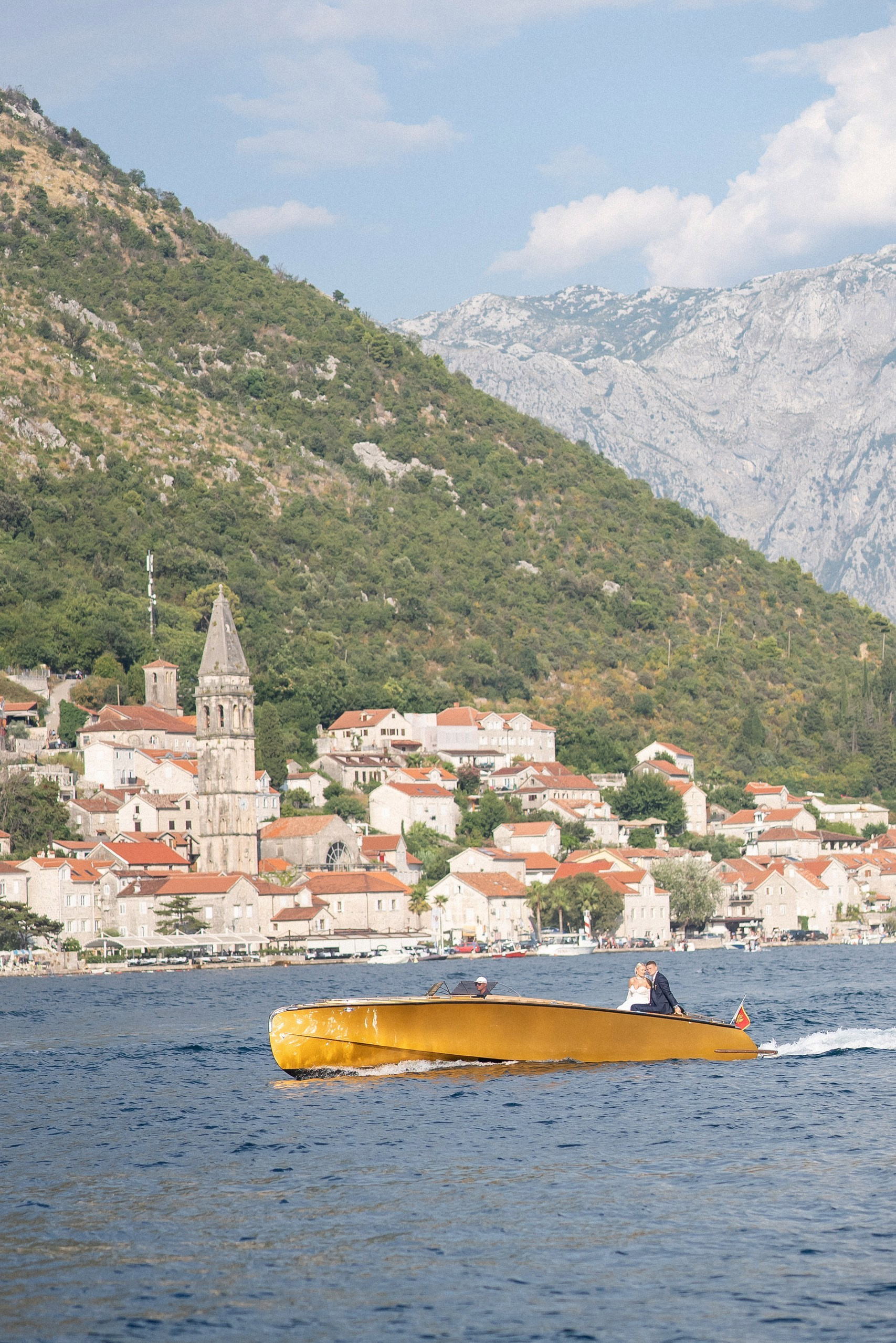
If you’ve chosen Montenegro, we’ll take care of the photos and video: I’m Mariia Sosnina and I take the photos, while Vasilii Khmelev films. On the bay, we know in advance where and when to catch the light over the water, so you won’t spend your trip hunting for spots.
See what the final shots look like in our wedding portfolio. If you’d like to see a day in motion, visit our wedding video page. Send us your date and we’ll check whether it’s free.
Which country is right for you?
Where to get married abroad depends on what matters most to you. Here’s what we’d tell our friends:
- Italy is for you if the budget allows and you want the classics: Tuscan villas, Lake Como, or a wedding in an Italian church that replaces the civil ceremony once the paperwork is filed with the comune.
- Croatia is for you if most of your guests live in the EU and find it easiest to travel within Schengen, and the summer crowds in Dubrovnik and on the islands don’t put you off. A church wedding can replace the civil ceremony there too, if your church has an agreement with the state and the paperwork is done in advance.
- Montenegro is for you if you want the Adriatic without overpaying, a small or medium-sized wedding where all the guests stay close by, and mountains rising straight from the sea. Prefer the open sea to a bay? See how a wedding in Budva works. Nearby, on the Budva Riviera, you’ll also find the island resort Aman Sveti Stefan.
And if you’d like a celebration just for the two of you, read our guide to an elopement in Montenegro. There’s no reception or seating plan, just vows by the water and a whole evening together.
Why we choose Montenegro (and when we honestly suggest somewhere else)
We live and work in Montenegro, so of course we love it. But we won’t recommend it to everyone. If you dream of a Catholic church wedding that also becomes a legal marriage once the paperwork is done, Italy or Croatia is the honest choice: in Montenegro, you can’t skip a separate civil ceremony with the registrar. And if almost all your guests live in the EU and you’d rather celebrate inside Schengen, that’s one more point for Croatia.
But if what matters to you is sea, mountains and old towns on one bay, a sensible budget and short transfers, Montenegro gives you all of that at once. We’ve gathered even more arguments in our article 10 reasons to have your wedding in Montenegro.
A wedding abroad is almost impossible without a planner
Whichever country you marry in, a wedding planned from far away depends on someone working on the ground. That person speaks the language, knows the local registry office, makes sure your documents don’t expire and secures your venue before its few high-season dates are gone. They also sort out the menu and decor, and plan the timing of the day and the guest transfers.
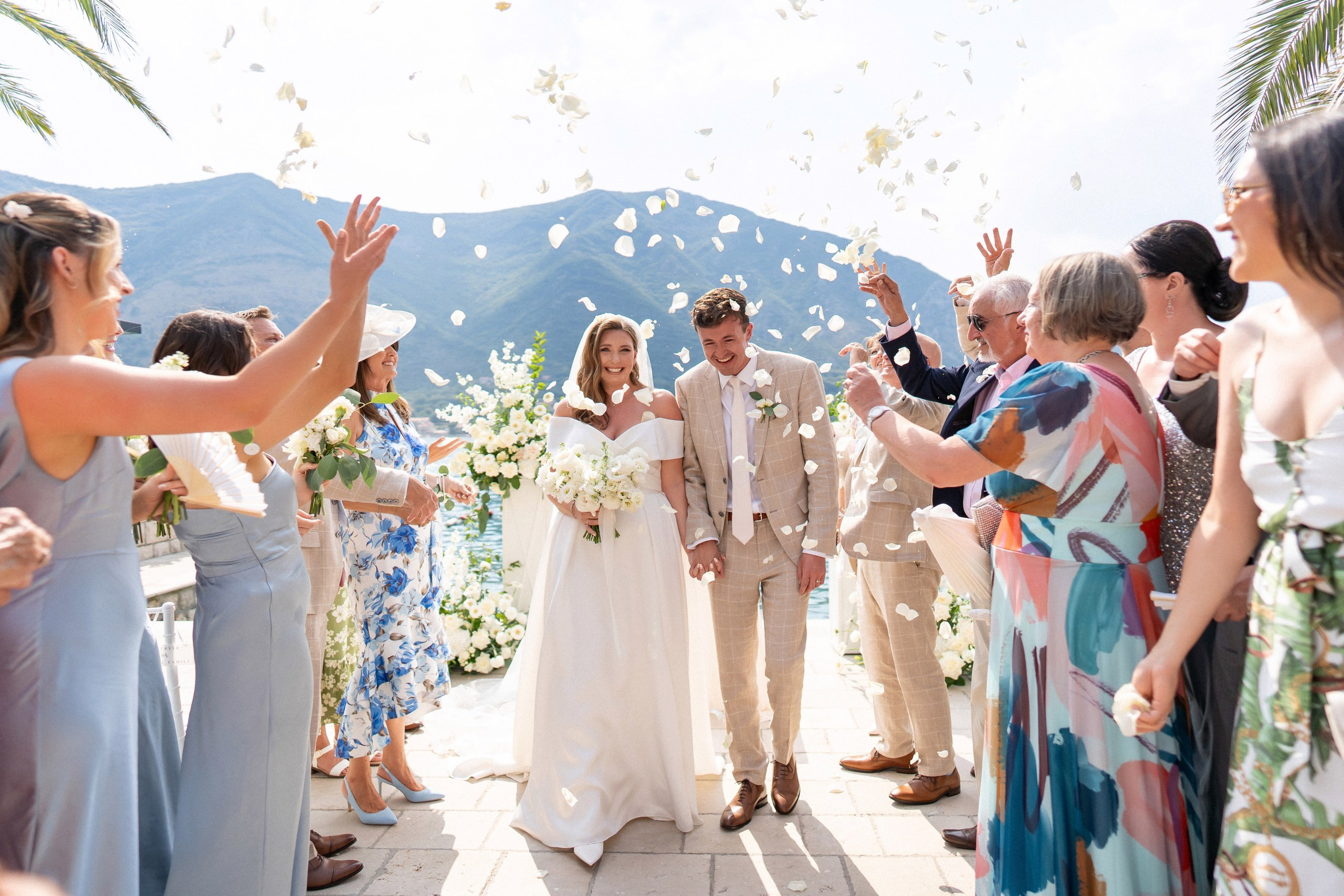
Juggling all of this on your own from a distance is really hard. We explain how to find the right person in our guide on how to choose a wedding planner in Montenegro. If you’re marrying in Montenegro, it’s simpler: just write to us. We’ve been photographing weddings here for years, so we’ll help you work out which venue and dates suit you, and we’ll recommend a trusted local planner, who will put together a full quote for your number of guests.
Frequently asked questions
Where is a wedding cheaper: Montenegro, Croatia or Italy?
According to Eurostat’s 2024 data, restaurants and hotels are noticeably cheaper in Montenegro: with the EU average set at 100, Montenegro scores 65.5, Croatia 95.4 and Italy 106.9. These are index points, not euros. A wedding in Montenegro itself usually costs €20,000 to €100,000. In Italy, foreign couples spent around €67,000 on average for 65 guests in 2025, according to the Osservatorio Destination Wedding in Italy study. We didn’t find comparable statistics for Croatia, but a wedding planner from Dalmatia gave a rough guide in 2025: from €50,000.
Can foreigners legally get married in Croatia?
Yes, foreigners marry in Croatia on the same terms as Croatian citizens. You need a birth certificate and a certificate confirming you’re free to marry, no older than 3 months, with an apostille and a translation into Croatian by a sworn court interpreter.
Can foreigners legally get married in Italy?
Yes. The key document is the nulla osta, a certificate from your home country stating that there’s no impediment to the marriage. It’s legalised or apostilled, translated into Italian and submitted to the comune, usually within 6 months of issue. If you don’t speak Italian, you need to bring your own interpreter to the ceremony.
How far in advance do you submit documents in each country?
In Montenegro, you apply by the deadline the municipality sets, usually one week to 15 days before the wedding. In Croatia, you contact the registry office at least 3 months ahead and submit your documents 30 days before. In Italy, the comune sets the timeline, and a foreign couple who don’t live in Italy sign a declaration instead of banns at least 3 days before the wedding.
Is a church wedding legally binding in Italy, Croatia and Montenegro?
A church wedding on its own doesn’t make you legally married in any of the three countries. In Italy, a Catholic wedding or a ceremony of some other recognised faiths replaces the civil one if you filed the paperwork with the comune in advance and the marriage is entered in its register afterwards. In Croatia, the same works if your religious community has an agreement with the state: you first get a certificate from the registrar confirming that the conditions for marriage are met, and afterwards the marriage is entered in the register. In Montenegro, only the civil ceremony with the registrar is legally binding, and a church wedding comes on top of it.
Which is less crowded: Dubrovnik or Kotor?
Both old towns have been on the UNESCO list since 1979, and both are busy in summer. Dubrovnik even launched its Respect the City programme to cope with the flow of tourists. In the Bay of Kotor, venues are spread all along the shore, so it’s easier to find a quiet spot for a wedding away from the old town.
Can we have the ceremony at a villa or by the sea?
In Montenegro and Croatia, yes, if the registrar allows it: ceremonies outside the registry office are allowed as an exception. In Italy, you can only marry legally outside the town hall where the comune has designated an official place for civil weddings. Everywhere else, couples have a symbolic ceremony.
More about getting married in Montenegro
Guides to help with everything else:
Italy, Croatia and Montenegro each have their own charm, and you can get married for real in any of them. But if your heart is drawn to the Adriatic and mountains above the water, come to Montenegro. You won’t regret it! I’m Mariia Sosnina, a wedding photographer in Montenegro, and Vasilii Khmelev and I would love to capture your day, from the ceremony to your first dance.
So why not start right now? Tell us when and where in Montenegro you dream of getting married. We’ll answer your questions about venues, timing and documents and recommend a trusted local planner. They’ll check available dates and put together a quote, and we’ll take care of the photos and video.

Budva Wedding: Venues, Ceremony and Local Tips
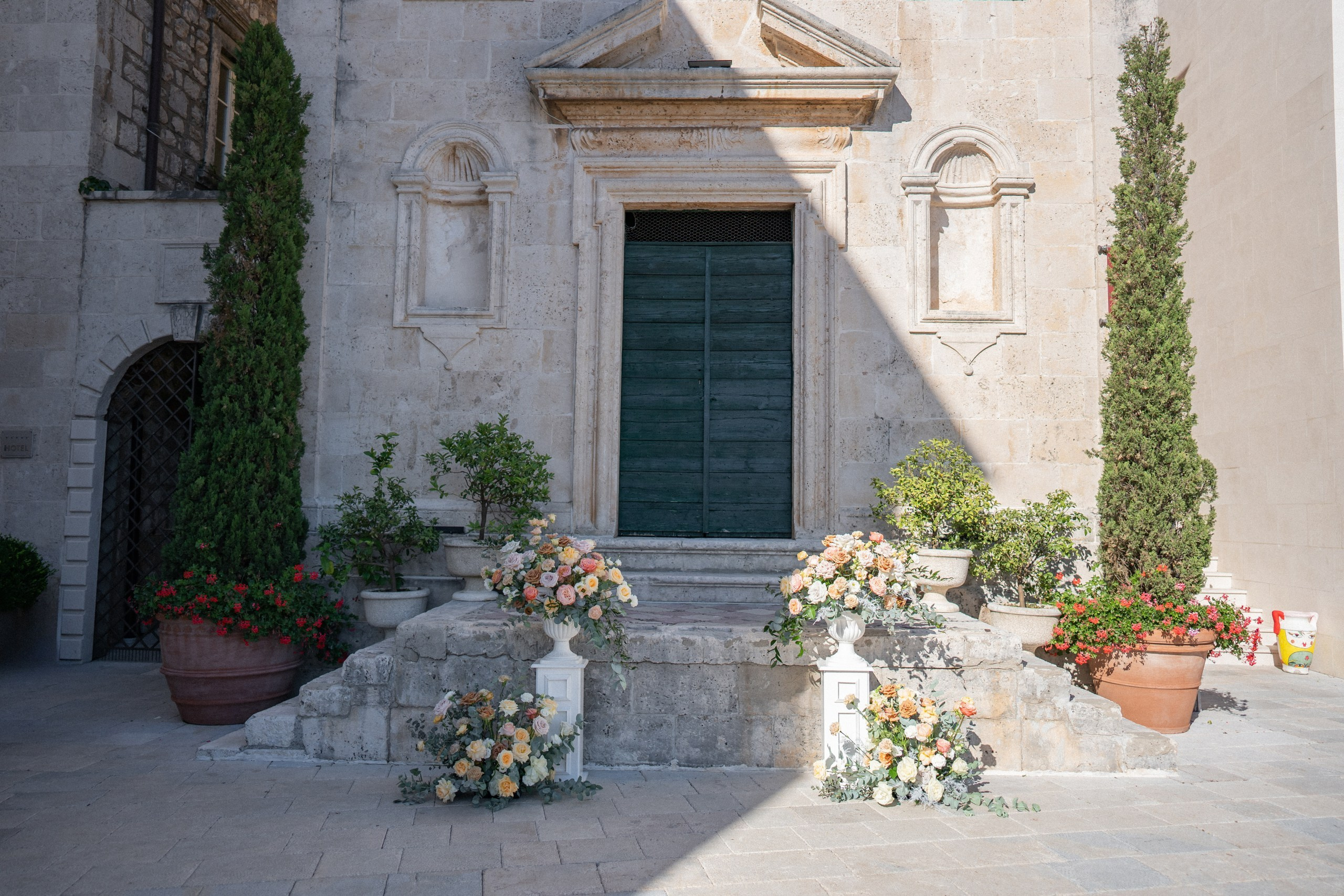
Perast Wedding: Venues, Ceremony and How the Day Works

A Wedding at Aman Sveti Stefan: the legendary island resort on the Budva Riviera
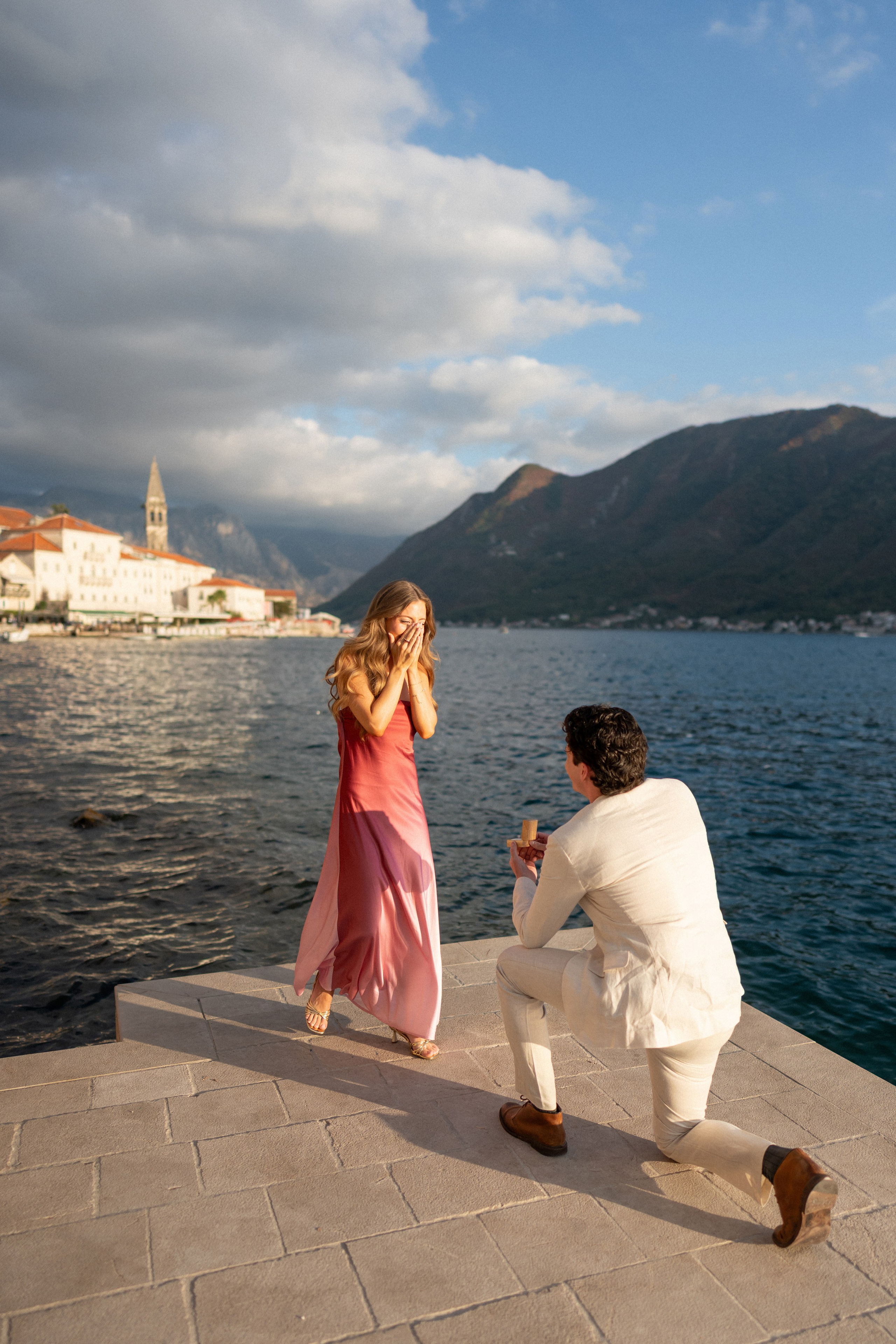
Best Time to Propose in Montenegro: Month and Time of Day

Mamula Island Wedding: A Fortress Island at the Mouth of the Bay of Kotor
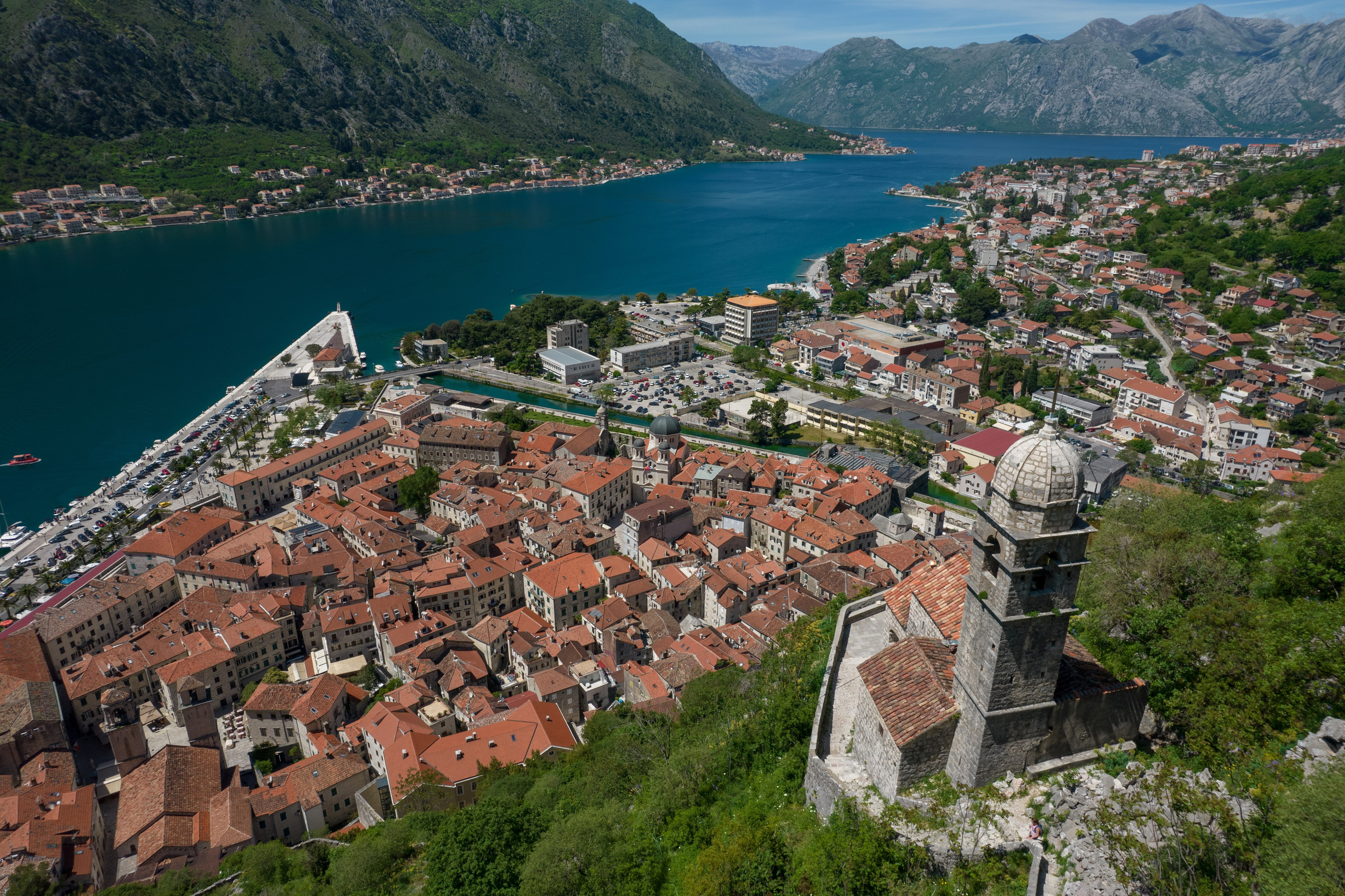
Best Hotels in Kotor: Where to Stay and What to Look For

Photographer in Porto Montenegro and Tivat

Photographer in Budva

Photographer in Perast

Photographer in Kotor

Wedding in Kotor: Venues, Ceremony and a Photographer’s Tips

A Wedding at Eagle Eye Villa Above Kotor

Adriatica: a Wedding on the Terrace and the Pier in Kotor Bay

Marriage Proposal for a Gay Couple in Montenegro
